

Joseph
Senior Client Support and Sales Associate
Top Skills
CRM Systems ManagementClient RelationsCommunication and Presentation

See their work and rates, message the ones worth talking to, and hire without a recruiter in the middle.










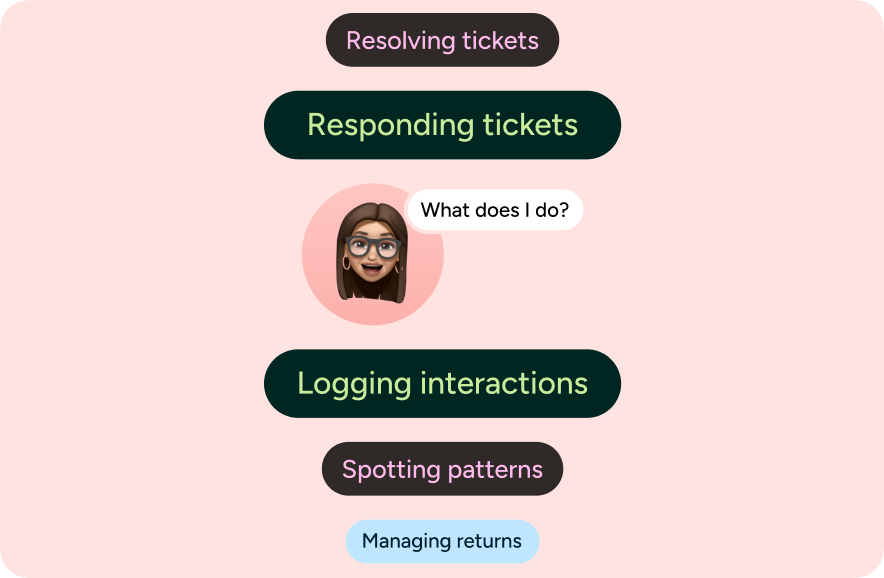
They handle the inbound flow of customer questions, complaints, and orders, and they keep your customers happy enough to come back. Day to day that means:
Responding to tickets across email, chat, and sometimes phone, usually within agreed response times
Resolving issues without escalating everything to a manager
Logging interactions in the help desk so the rest of the team has context
Spotting patterns: when the same complaint comes in five times, flagging it as a product or process issue
Managing returns, refunds, or order changes inside your operational rules
A strong customer service representative protects the customer experience without giving away the store. They know when to bend a rule and when to hold the line. Most companies hire one when the founder or operations lead is spending more time in the inbox than running the business, and customers start noticing the slower response times.
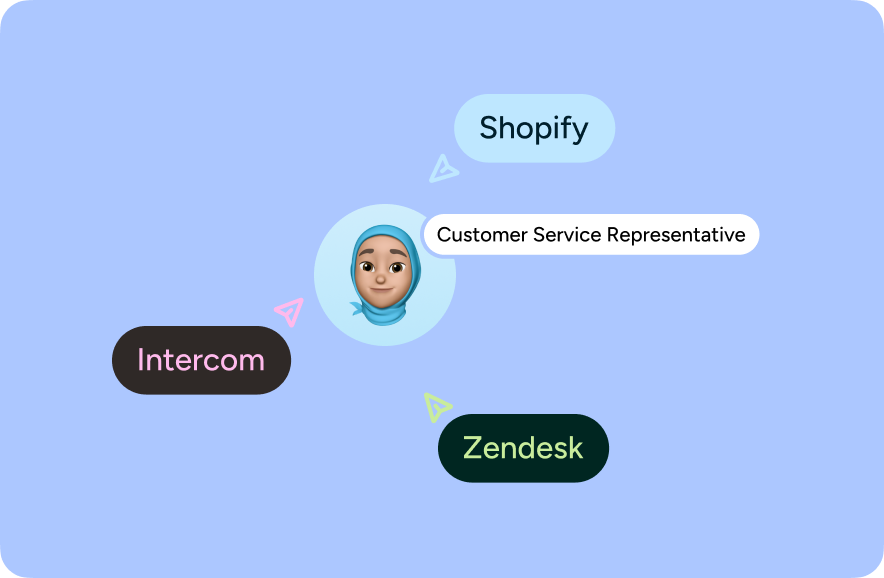
The tell is how they handle a difficult interaction in a roleplay. A strong one stays calm, hears the customer out, and finds a path forward without sounding scripted. When you interview, look for:
Specific examples of complaints they handled and what the outcome was for the customer and the company
Comfort with tooling. Most help desks share a similar logic, but transferring fast matters
Real care about the customer experience, not just ticket-closing speed
Avoid anyone whose answers default to robotic scripts or who can't tell you about a customer they actually helped.
One flat $1,999 placement fee when you hire, whatever the rate. No percentage of salary.
Get StartedDescribe the role like you'd say it out loud. Get matched in under a minute.

| Hiring locally | Job boards | Traditional recruiter | Scout OS | |
|---|---|---|---|---|
| Cost | $90k–$130k/yr salary | Free to post, costly in time | 15–30% of salary, $15k–$30k on a $100k hire | $99/mo + $1,999 flat |
| Time to shortlist | Weeks | Days of sorting | 1–4 weeks | Under a minute |
| Who vets | You | Nobody | The recruiter | Done. ~1 in 300 makes it on |
| Who picks | You | You | The agency | You |
| If it fails | You eat it | Start over | Sometimes a replacement | Next placement free |
| Lock-in | Full salary | None | Retainer or contract | Cancel anytime |
A recruiter's fee scales with the salary, so the better the hire, the more it costs you. On Scout OS it's flat. $1,999 is $1,999 whether the person earns $40,000 or $120,000.
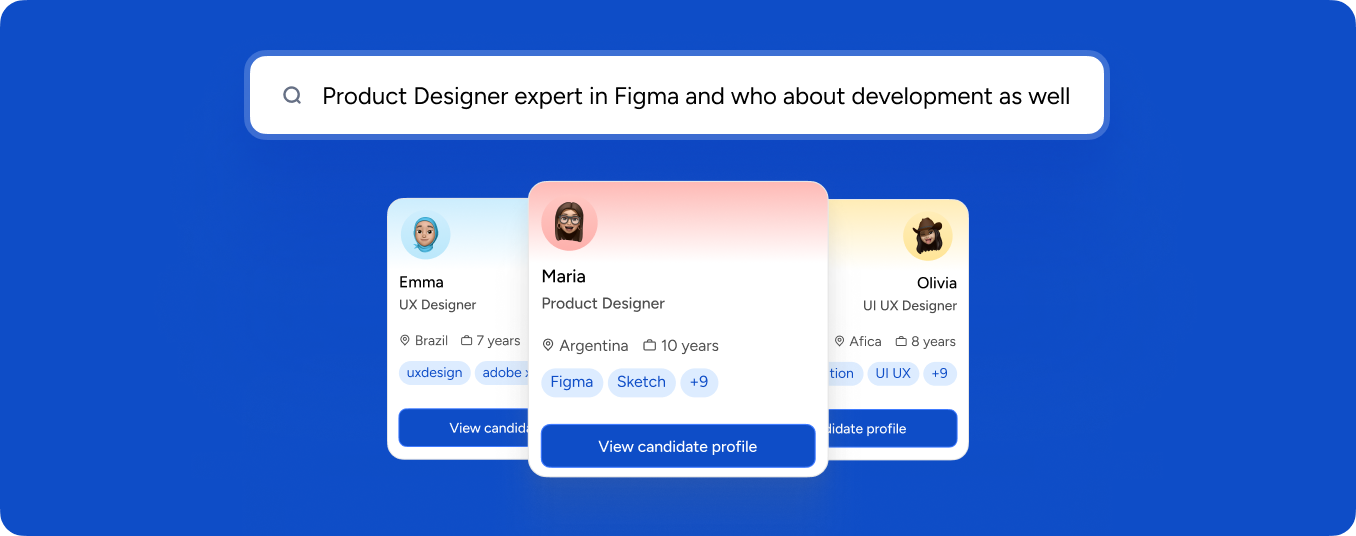
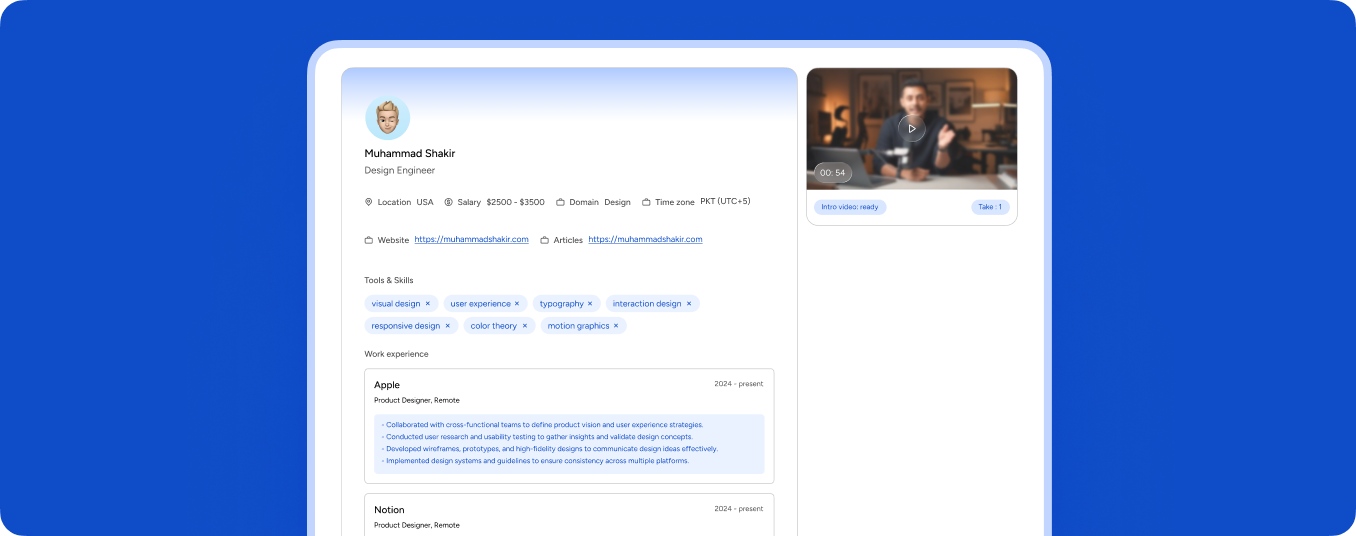
Because you see the actual person, their work, and their rate before you talk to anyone — no blind trust in a recruiter's shortlist.
Every profile goes through skills verification and reference checks before it’s searchable. Roughly 1 in 300 applicants makes it onto the platform.
LATAM, Africa, South Asia, and Europe are all searchable and filterable right on the platform.
Your next placement is free — no separate agency fee, no starting the search over from zero.
Everything you need to onboard and pay your hire compliantly is included once you place them.
$100/mo for full access to profiles and messaging, plus a flat $1,999 placement fee when you hire — no percentage of salary.
Search and get matched in under a minute. Most teams shortlist and interview within a week.